
LIRR Third Track: From Economic Study to Construction
HR&A conducted a comprehensive economic and fiscal impact study for the Long Island Index analyzing the proposed LIRR Main Line Third Track project, which faced significant local opposition despite its inclusion in the MTA’s capital plan. Using complex economic modeling with project modeling from Parsons Brinckerhoff, we demonstrated that the $2 billion transit investment would generate 14,000 new jobs and $5.6 billion in annual economic output by 2035, leading to Governor Cuomo’s approval and current project construction.
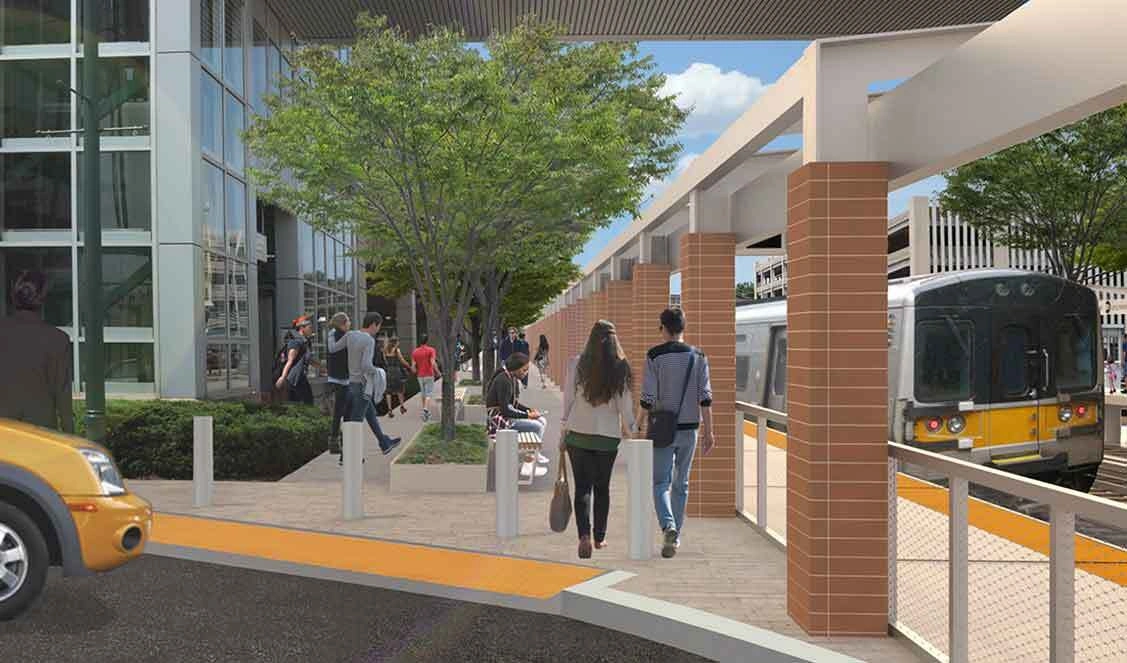
The Third Track project required robust economic analysis to overcome substantial community opposition and demonstrate long-term benefits of adding a 10-mile track segment between Floral Park and Hicksville to improve system reliability and reverse peak service. HR&A employed sophisticated REMI Policy Insight modeling to quantify benefits including improved employer access to skilled regional workforce, higher productivity in transit-oriented employment nodes, and significant rider time savings. Our analysis examined both construction phase impacts and long-term operational benefits, incorporating complementary transit-oriented development policies to maximize economic potential.
Our findings revealed that Third Track would position Long Island for sustained economic growth by making it more attractive for living and working, generating $143 million in annual tax revenues for Nassau and Suffolk Counties while attracting 35,000 new residents by 2035 to help stem outflow of talented workers. During the five-year construction phase, the project would contribute $910 million in gross regional product and average 2,250 jobs annually, providing crucial employment for construction workers affected by the Great Recession. HR&A’s compelling briefing book enabled the Long Island Index to effectively communicate benefits to diverse stakeholders including the MTA, elected officials, businesses, and residents. The study proved instrumental in reviving the project and securing approval and funding, with the $2 billion investment now under construction and expected completion by late 2022, demonstrating how rigorous economic analysis can transform infrastructure opposition into support through clear demonstration of community benefits.