
Alternatives to Incarceration Pilot
Designing Justice + Designing Spaces
HR&A collaborated with JusticeLA and Designing Justice+Designing Spaces to advance transformative restorative justice initiatives through LA County’s Care First Community Investment program. We developed a concept plan for a pilot campus in Long Beach and co-authored a 2022 concept paper proposing the FLOW Youth Center, a prototype for juvenile restorative justice that disrupts traditional incarceration models by prioritizing community-based mental health, substance abuse treatment, and holistic wellness programming.

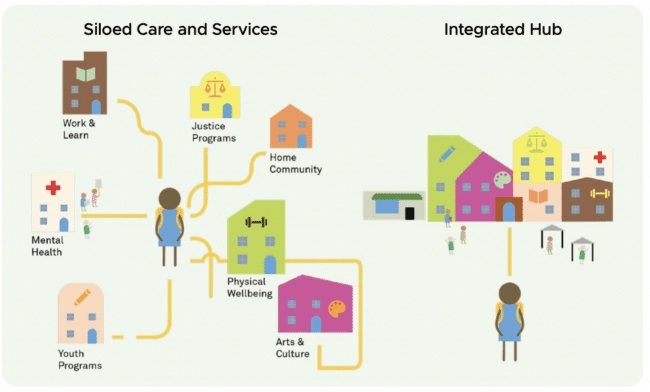
LA County’s criminal justice system required innovative alternatives to traditional incarceration models that address root causes of youth involvement in the justice system while building community capacity for healing and support. JusticeLA, a collaborative of LA-based organizations, and Designing Justice+Designing Spaces, the nation’s leading design nonprofit focused on restorative justice, sought to develop community-based solutions that challenge conventional approaches to justice infrastructure. HR&A’s collaboration supported their vision of creating spaces and programs that break cycles of punishment by reinvesting in care-focused environments designed through authentic community engagement.
The FLOW Youth Center concept represents a replicable model for radically inclusive, equitable design that addresses youth incarceration’s root causes while providing holistic health services, education, and employment opportunities. Our concept paper outlines an innovative community-engaged design process and establishes clear implementation pathways, including robust engagement strategies and estimated budgets for advancing the pilot campus development. The work positions Designing Justice+Designing Spaces and JusticeLA to secure government and philanthropic investment in their concept development fund while inspiring grassroots efforts to design and build similar centers throughout Los Angeles and nationally. This collaboration demonstrates how strategic planning and community engagement can transform criminal justice infrastructure, moving from punishment-focused facilities toward healing-centered spaces that strengthen communities and create pathways for justice-involved youth to thrive.