
Broadway Station Partners
HR&A advised Broadway Station Partners on market-supportable development planning and public financing strategies for one of Denver’s largest transit-oriented development sites, the former Gates Rubber Company plant. Our work directly contributed to the Denver City Council’s unanimous approval of a $140 million public infrastructure financing package, including $90 million in tax increment financing—the second largest ever approved in the city—enabling groundbreaking in 2018.
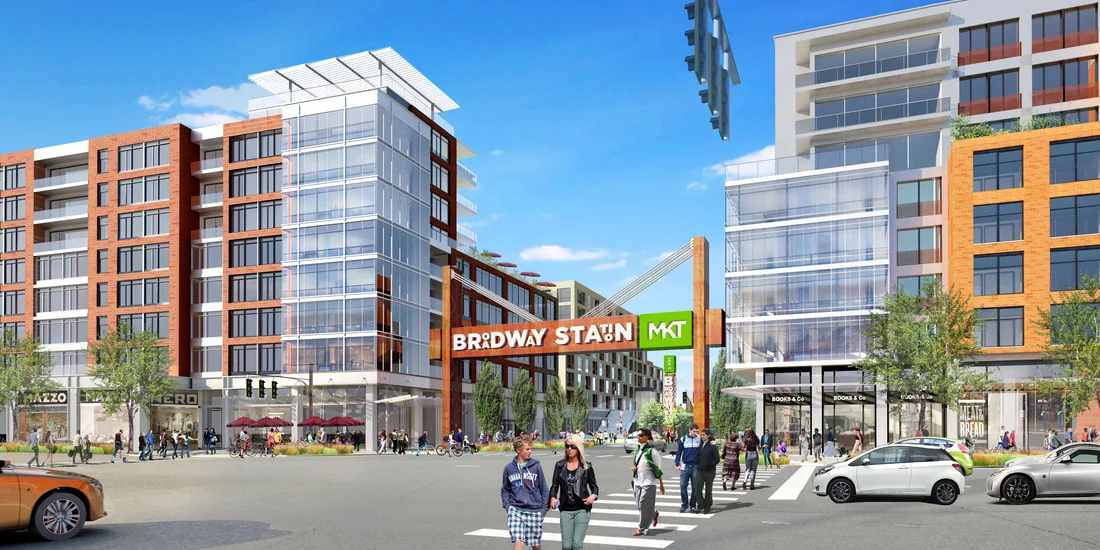


Located just three miles from downtown and adjacent to one of Denver’s busiest light rail stations, the former Gates Rubber Company site presented extraordinary potential along with significant challenges. In one of America’s fastest-growing cities, this rare large-scale urban infill opportunity promised to deliver much-needed housing, office space, and walkable retail, but required substantial infrastructure improvements to unlock its development potential. The site’s size, complexity, and strategic location demanded sophisticated market analysis, creative value creation strategies, and innovative public financing solutions that would satisfy both private investment requirements and public benefit expectations in a highly visible project.
Working closely with an engineering and planning team, HR&A conducted comprehensive market assessments and financial feasibility analyses to identify optimal development densities, typologies, and strategic infrastructure investments. Our analysis informed a master plan that targeted specific connectivity and placemaking improvements to maximize development value while enhancing public benefit. We then developed a detailed value-capture strategy, evaluating potential funding mechanisms including tax increment financing and metropolitan district revenues. This analysis formed the foundation for the landowner’s financing request and negotiations with local authorities, ensuring that project-generated revenues would adequately support essential infrastructure while delivering market returns for the developer. The resulting approval of the second-largest TIF package in Denver’s history demonstrated the power of our rigorous approach to public-private development financing.