
plaNYC and OneNYC New York City’s Long-Term Strategy
New York City Economic Development Corporation (NYCEDC)
HR&A shaped New York City’s approach to sustainability and equity through leadership of two landmark planning initiatives spanning over a decade. Our strategic planning for PlaNYC (2007-2011) and OneNYC (2015, 2019) positioned NYC as a national leader in municipal climate action while evolving the city’s governance framework to center equity, ultimately aligning $117 billion in capital investments with community-driven priorities.
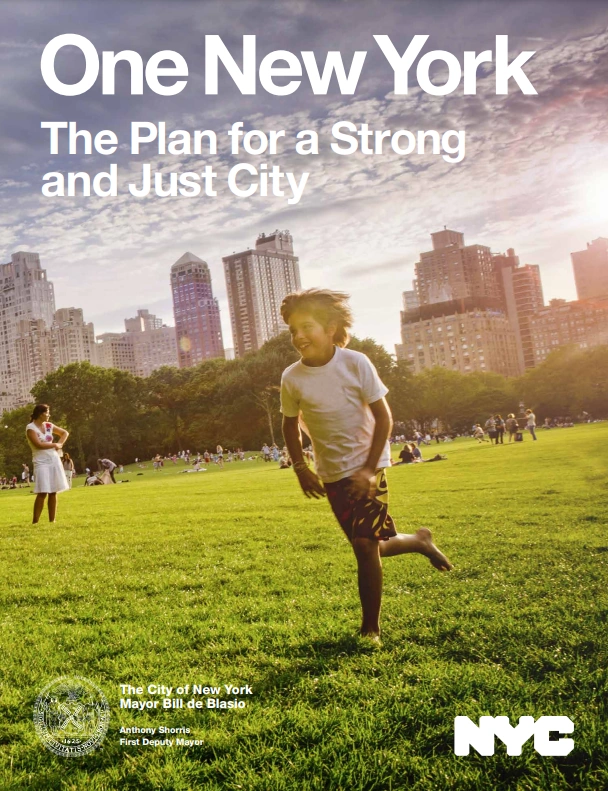
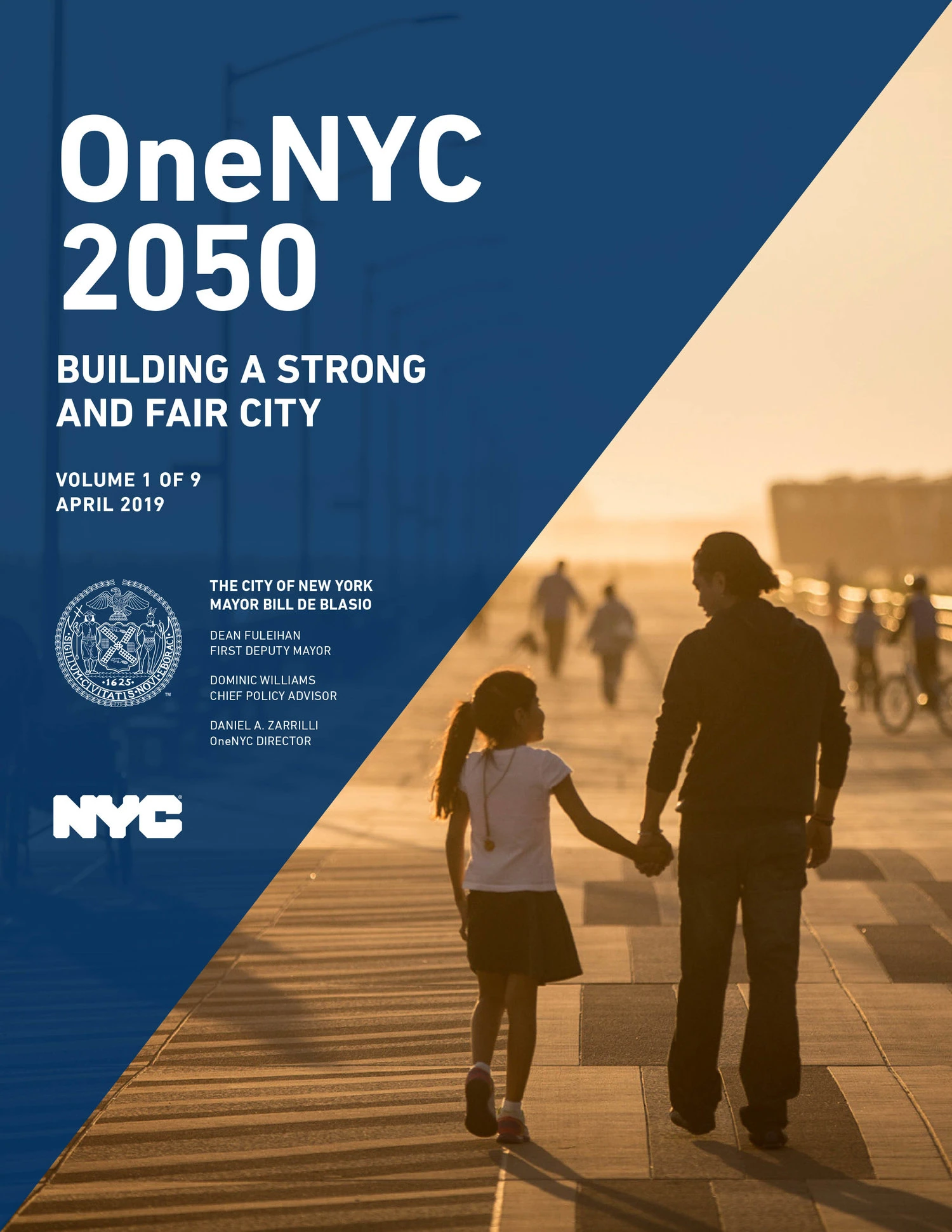
Beginning with PlaNYC in 2007, HR&A established comprehensive frameworks for sustainable urban development that positioned New York as a national leader in municipal climate action. The team managed complex transportation planning initiatives, coordinated interagency working groups across departments, including DOT and EDC, and developed policy foundations that led to breakthrough programs like the nation’s first municipal brownfield cleanup initiative. When Mayor de Blasio sought to expand this work through OneNYC, HR&A orchestrated an even more ambitious planning process that brought together more than 70 city agencies while engaging 16,000 residents through community forums, surveys, and neighborhood meetings to ensure diverse voices shaped policy directions.
OneNYC represented a fundamental evolution in municipal planning by integrating equity as a core priority alongside traditional goals of growth, sustainability, and resilience, establishing a model that influenced urban planning nationwide. HR&A’s comprehensive approach included economic and demographic analysis, innovative capital investment mapping that tracked $266 billion in planned regional spending, and creation of data-driven systems for cross-agency collaboration. The resulting plans directly informed executive budget processes, with the city proposing $117 billion in capital programming aligned with OneNYC initiatives as part of New York’s Green New Deal commitment, demonstrating how strategic planning can translate community priorities into concrete policy outcomes and lasting municipal infrastructure.